Time blocking reserves a period for work. Timeboxing limits how long you invest in a particular activity before reviewing the result. You can reserve a morning writing block and use a shorter timebox inside it to draft one part of a proposal.
“Write from 09:00 to 10:30” protects an opportunity, but says little about how to stop. “Spend 45 minutes drafting three recommendations” adds a boundary and a reviewable output. Use the distinction to solve the problem you actually have.
Protect an opportunity or limit an investment
Asana describes timeboxing as fixed time investment and explains using it within reserved work periods.
| Dimension | Time blocking | Timeboxing |
|---|---|---|
| Main question | When will this work have space? | How much effort will this round receive? |
| Example | 09:00–10:30 for proposal writing | 45 minutes for three recommendation points |
| Boundary review | Was the block protected; what moved forward? | What exists, what is missing, is another round justified? |
| Common failure | Filling the day without transitions or breaks | Stopping without preserving a useful result |
Write the same morning both ways
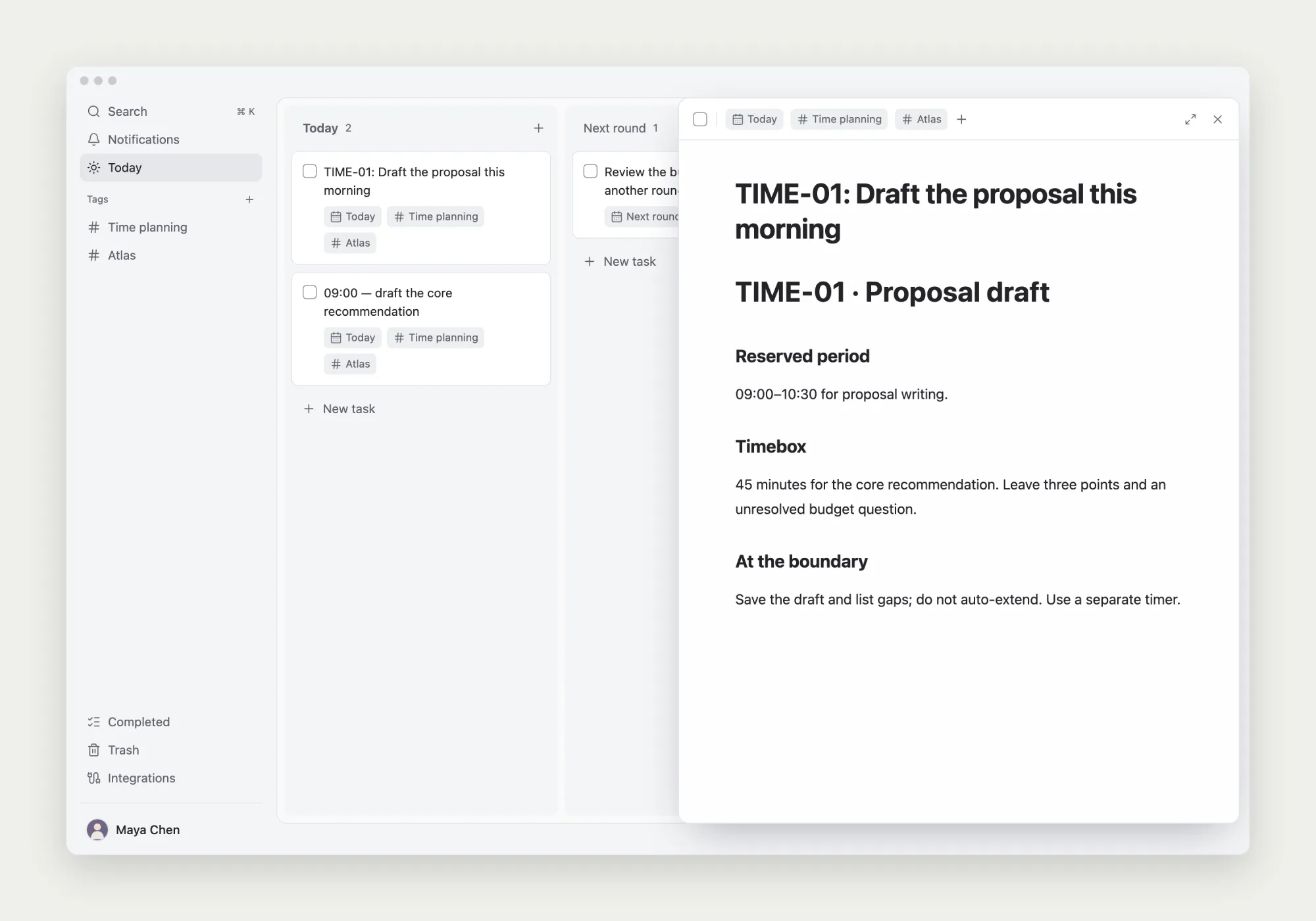
In TIME-01, a consultant reserves 09:00–10:30 for a client proposal. The first 45 minutes go to core recommendations; the rest allows gap review, a short break and preparation for the next discussion. Not every minute needs an output quota.
The timebox should leave three points and a budget question. If only two points exist at the boundary, keep that result and diagnose whether the missing point needs evidence or clearer writing. Do not label unfinished work complete to satisfy the plan.
Make a decision at the boundary
End the round, open a new one, or resolve a blocker first. If you extend, name the extra investment and its goal. A timer ringing should trigger a decision, not disappear into another hour; necessary quality checks still apply.
In TodoNote, keep the planned period, output and unresolved questions in the task note. Use your existing calendar or a separate timer for timekeeping. Create the next action from the actual gap rather than duplicating “continue writing.”
Adjust from execution records
If research repeatedly consumes the whole round, prepare a separate evidence task next time. If meetings keep breaking the block, address that calendar conflict. Neither problem is automatically a lack of willpower.
A few plan-versus-result records reveal which activities benefit from protected periods and which benefit from limited exploration. Keep enough flexibility for real work rather than turning the day into a grid with no room to move.
Continue with: Why Do Your Tasks Keep Taking Longer Than You Expected?