If tasks keep exceeding your estimates, check what the estimate includes. An hour for editing may omit finding the right version, confirming terminology, and checking the final result. Recording estimated effort, actual effort, and waiting separately gives the next estimate a clearer basis.
Start with a familiar type of work: reviewing copy, preparing a presentation, or organizing feedback. You need enough detail to explain a difference, rather than a minute-by-minute account of the entire day.
Where does “done” begin and end?
“Review three pages” could mean reading and editing, or delivering a version another person can approve. Write the finish line first. Otherwise, the estimate and the actual time may describe different scopes.
Record assumptions such as “the layout stays the same” and “the glossary is approved”. If the scope later changes, note the change separately. Additional work deserves an explanation beyond “I was slower than expected”.
Separate preparation, execution, and rework
In the copy review, finding the current file took 20 minutes, editing took 55, and terminology rework added 25. The total active effort was 100 minutes. Compared with the original 60-minute estimate, the missing work is now visible.
Approval arrived the next morning. That wait matters for the delivery date, but it is not another night of active work. Planning needs both effort and elapsed time; understanding your own pace requires keeping them distinct.
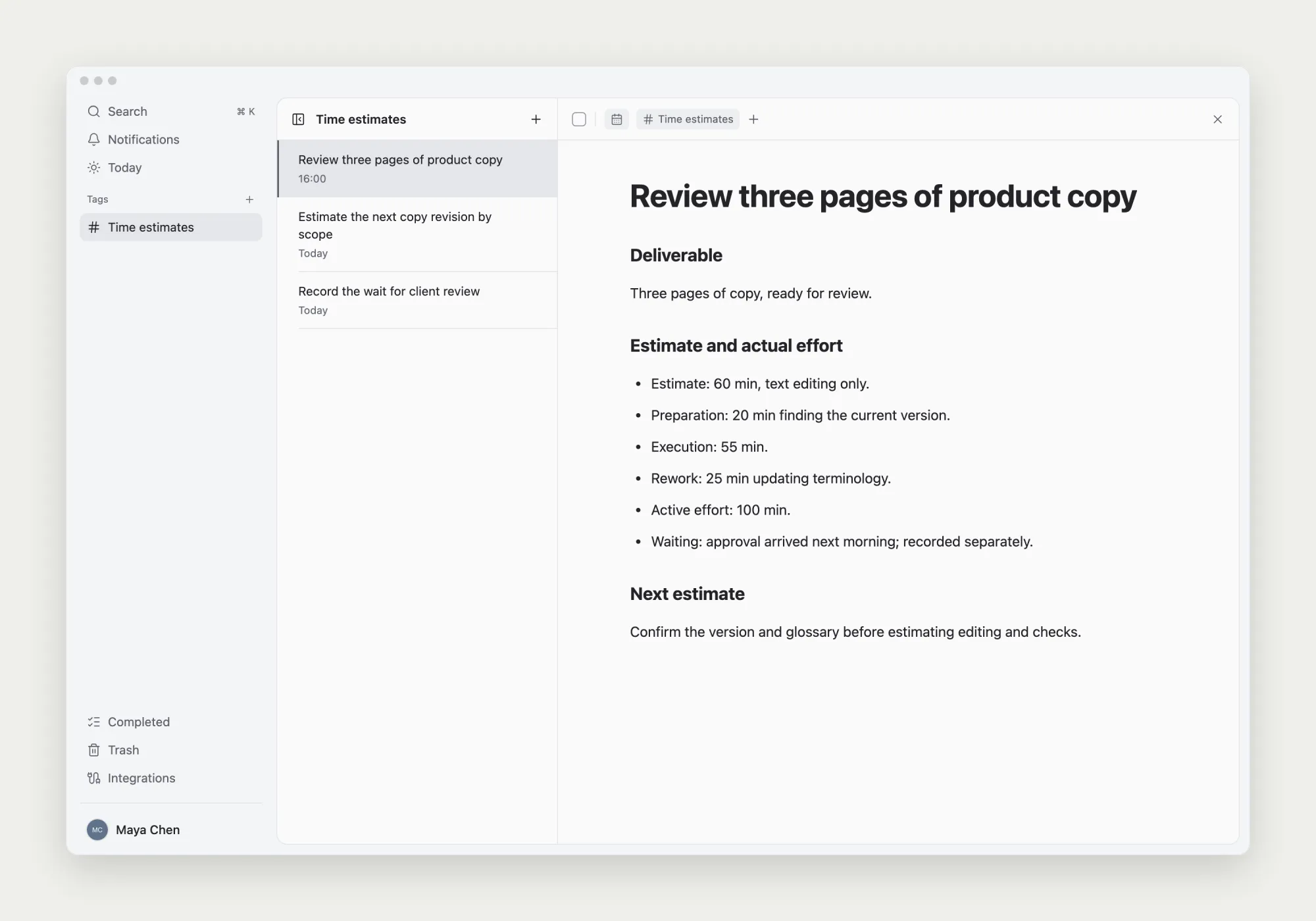
Correct the omission before adding a multiplier
If version confusion caused the delay, confirm the source file earlier. If final checks always disappear from the estimate, include a checking step. Adjusting a specific omission is more informative than doubling every future estimate.
Compare like with like. Three pages of edits differ from three pages of redesign. An unfamiliar investigation also differs from repeating a known procedure. When a major unknown remains, schedule a short investigation and revise the estimate afterward.
Let uncertainty remain visible
An estimate might say “90–120 minutes after the materials are ready, excluding review wait”. This expresses a current judgment and its conditions. Preserve the original figure when revising it, then explain what changed.
In TodoNote, write the figures and assumptions in the task note. Preparation, execution, and verification can be subtasks. Enter the durations yourself; this workflow does not depend on an automatic timer. Dates schedule work, while the note explains the estimate.
A compact time record
Task / deliverable:
Estimated active effort:
Assumptions / unknowns:

Actual preparation:
Actual execution:
Checking / rework:
Waiting interval and reason:
Scope changes:

Main difference and cause:
What to confirm next time:
Comparable earlier task:After several similar tasks, look for recurring omissions. Read that history before the next estimate and add the result afterward. For scheduling the work around a real deadline, see start dates and due dates.