After cancelling a project, record why it stopped, which obligations remain, what material is reusable and what would justify reconsideration. Remove abandoned development from the active plan, but give closeout work its own completion checks.
Six months later, a similar idea may reappear. The useful question will be why the previous approach stopped, not simply how many screens were built.
Name the approach you are stopping
STOP-01 concerns a personal booking tool. Two trials still required manual coordination, so the implementation did not solve its intended problem. That supports stopping this approach, not a conclusion about every booking use case.
Keep the decision date, evidence locations and scope of the conclusion together. “Not investing this month” also means something different from permanently abandoning the idea.
Check obligations before clearing the board
Atlassian’s project closure guide includes recording outcomes and retaining lessons. For cancelled work, inspect commitments that cancellation has not yet resolved.
| Item | Treatment | Check |
|---|---|---|
| Trial users still have access | Notify them and close as agreed | Verify notice and entry status |
| Unbuilt features | Remove from execution; retain stop reason | Confirm no delivery promise remains |
| Trial notes and date tests | Retain with context | Locate originals and explain reuse limits |
Keep the learning in its original context
A prototype, rejected assumption or tested technical detail may still be useful. Retain material that helps a future decision and label its connection to the cancelled approach.
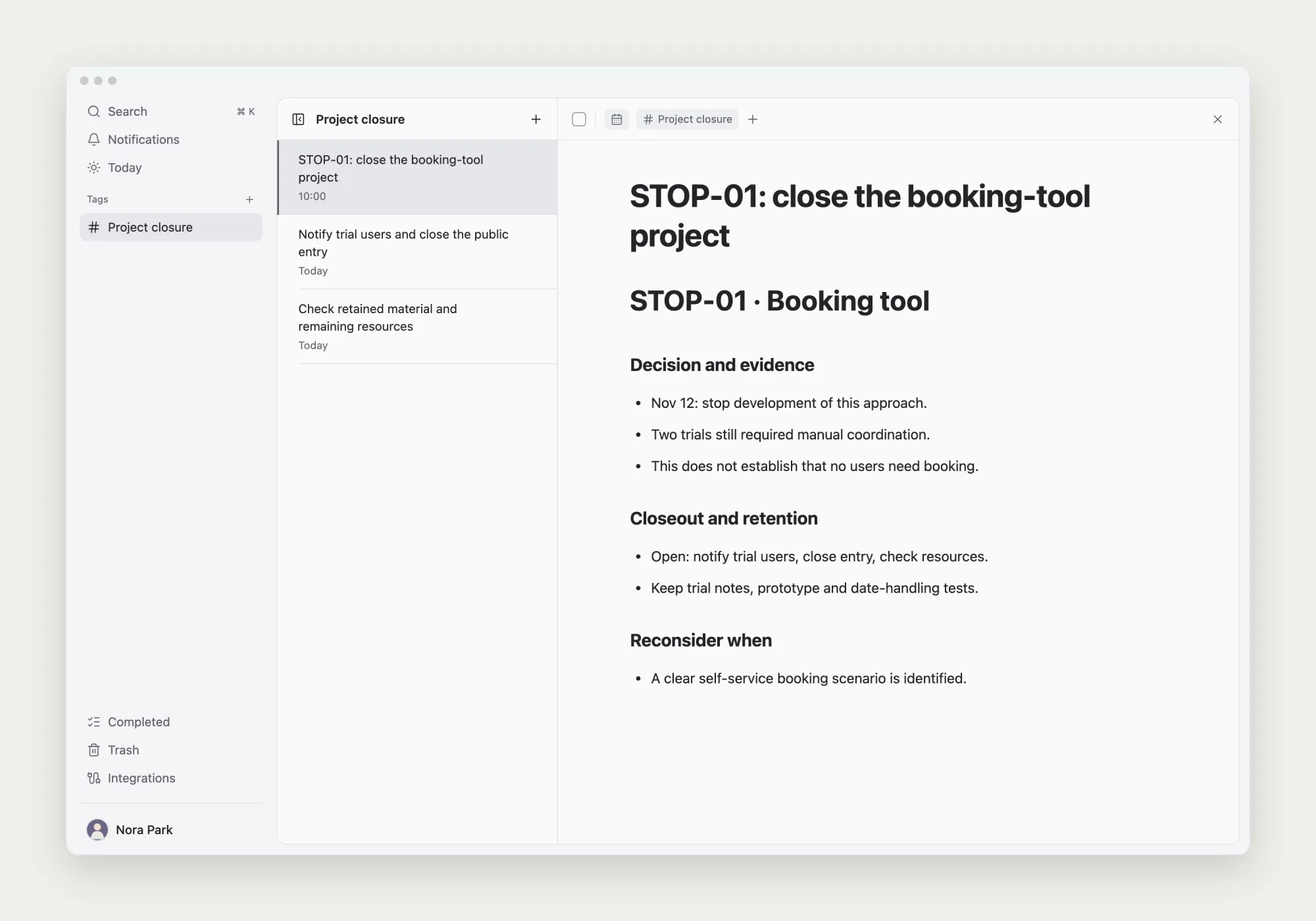
In TodoNote, give the closeout record a project tag and state that development has stopped. Notification, entry closure and resource checks remain separate tasks until actually done.
Make restarting a deliberate decision
“Return when free” gives your future self little guidance. A better trigger is finding a specific self-service scenario and an opportunity to test a new assumption.
After closeout, update the record with actual results. Even if the project never restarts, it will explain its status and identify which material remains useful.
Related practice: How to write a decision log that preserves the reasoning