A workout log can begin with four things: the plan, what you actually completed, how the session felt, and what needs confirming before next time. Use one dated task per session and a shared tag. Keeping plan and actual work separate preserves a record of training that really happened.
An elaborate format can be difficult to finish after exercising. Start with information you will look up again, then add detail only when it serves a purpose. The record should help you resume and ask specific questions.
Write down the session before starting
Use the training arrangement you have already confirmed. Record exercises, planned sets, and relevant conditions. If a coach or existing plan supplied it, keep the source and version so later changes have a reference point.
Note meaningful changes in available time, equipment, or how you feel that day. These can explain differences in completion rather than disappearing behind a tidy checklist.
Add what you actually completed
Record actual sets and the weight, duration, or distance you need to compare. Use explicit, consistent units. If you record a machine’s numbered setting, name the machine instead of treating settings on different equipment as equivalent.
Keep reasons for unfinished work, such as time running out or an item being stopped. Copying the original plan into the results hides information that could matter when reviewing the next session.
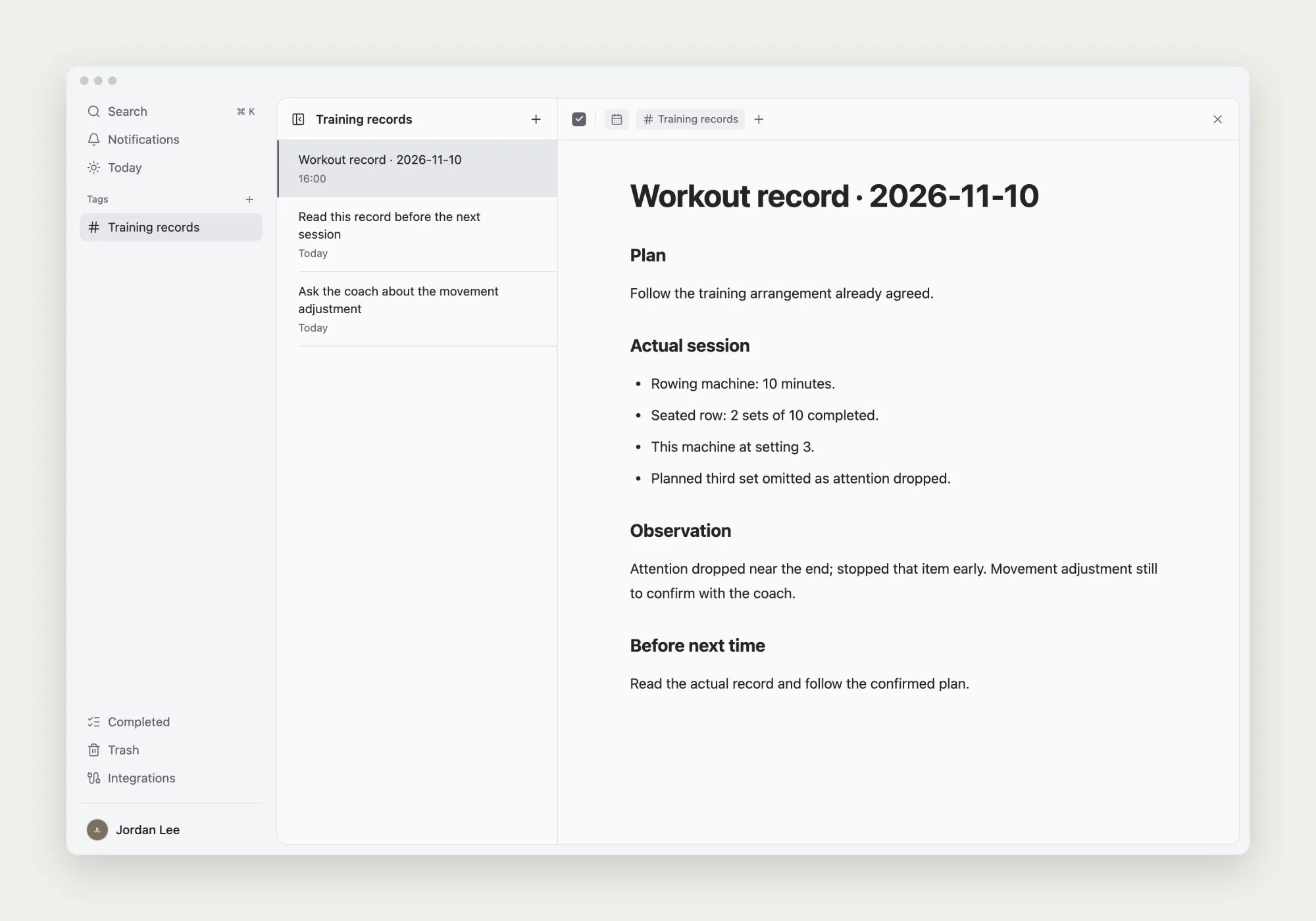
A record might say “rowing machine: 10 minutes; seated row: two sets of ten, machine setting three; planned third set not completed”. This describes that session, followed by the reason and any question for the coach.
Be specific about observations
“A bad session” can become a more useful observation: when attention dropped, which item was unfinished, and what movement question needs discussing. One session does not establish a long-term trend.
For technique changes or discomfort, record the circumstances and ask the appropriate professional. Keep their feedback with the question. A log records what happened; it should not automatically turn one result into a reason to increase training.
Read the relevant record before the next session
Use the training tag to find a similar session. Review actual completion, open questions, and confirmed feedback. Where conditions differ, keep those differences visible before comparing the numbers.
In TodoNote, dates schedule sessions, subtasks hold checks, and notes hold results. A recurring task can reuse the record structure while each session gets its own actual outcome. The tool keeps the records; your chosen plan guides the training.
A lightweight workout record
Session date / type:
Source of the plan:
Planned exercises and sets:
Condition / equipment today:

Actual exercises / sets / units:
Unfinished work and reason:
Specific observation and when:
Question to ask:

Feedback received:
What to confirm next time:
Related record:A short, honest record of plan, completion, and questions is enough to start. For repeating the format without overwriting earlier results, see recurring tasks and separate session notes.