A work shutdown routine closes the day by recording loose ends, updating active work, and leaving a clear first action for tomorrow. A five-minute limit is a practical starting point; it should help you stop rather than create another long planning session.
The unfinished task may remain unfinished. What changes is that you no longer need to remember which version you were using or what you meant to check next.
Capture what would otherwise stay in your head
Use the first minute to collect loose questions and promises from the work you actually touched. Capture them in a trusted place, but avoid reopening every inbox in search of more work. Check for urgent commitments that truly need attention before you stop.
Cal Newport describes shutdown routines as part of ending the workday deliberately. The sequence below adapts that idea into a short record you can use without copying an entire productivity system.
Leave an executable restart point
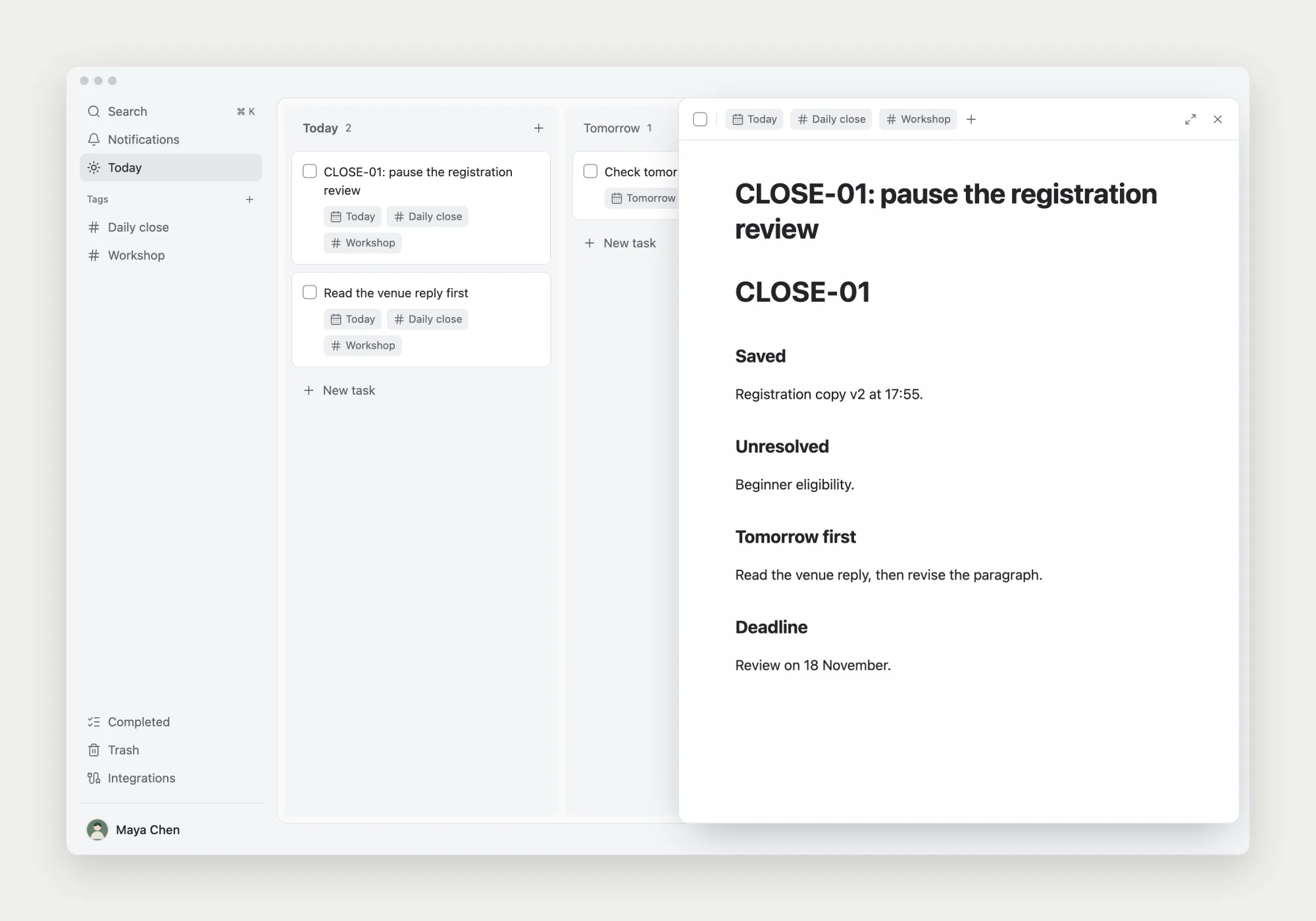
CLOSE-01 pauses a registration review at 17:55. Copy v2 is saved, beginner eligibility is unresolved, and tomorrow's first step is to read the venue reply before revising that paragraph. “Continue the page” would leave too much to reconstruct.
| Time | Action | Useful result |
|---|---|---|
| Minute 1 | Capture loose ends | Nothing important relies on memory |
| Minutes 2–3 | Update active work | Saved version and unresolved point |
| Minute 4 | Choose the next action | A concrete starting point |
| Minute 5 | Check commitments and stop | Urgent exception handled or recorded |
Move dates only when the new plan is realistic. A task that could not fit today does not automatically fit tomorrow. Keep the actual deadline visible and distinguish it from the day you intend to work on the task.
Stop after the plan is trustworthy enough
In TodoNote, update the current task note with the last checked state and next action. Add a subtask if tomorrow's action is distinct, then arrange it on the intended day. The note retains the context while the board shows what you plan to do.
If an urgent unresolved commitment remains, name it explicitly and handle or hand it over through your normal channel. Otherwise, stop checking. The routine is complete when tomorrow has a trustworthy starting point, not when every task is complete.
Shutdown checklist to copy
Date / shutdown time:
Loose ends captured:
Commitment needing attention tonight:
Current task:
Last checked state:
Saved version / location:
Unresolved question:
Tomorrow’s first action:
Input needed before starting:
Actual deadline:
Planned work date:
Ready to stop / exception to handle:Shorten the routine when it becomes a project
If the process regularly expands into reorganizing tags or rewriting the weekly plan, move that maintenance to a separate review. Keep tonight's scope to what you need to stop and what you need to restart.
Read next: How to Resume Interrupted Work: A Task Restart Note Template
Sources and background: Cal Newport