When urgent work arrives, establish the minimum result and its real deadline. Compare it with existing commitments. If both will not fit, propose a delay, smaller scope or another person, then confirm the change with everyone affected. Adding another item to today does not resolve the collision.
At 13:00, the list already contains a training handout check and a website draft. A client asks for a product-name correction “this afternoon.” Which material needs changing, and when will someone use it?
Find the deadline behind the word urgent
RUSH-01 establishes a 15:00 rehearsal and a 16:00 handout distribution. The correction affects the cover and body. The website draft was promised by the end of today, so accepting the request affects an existing commitment.
A change needed only on tomorrow’s website might lead to a different plan. Ask about use time, minimum scope and consequences before treating the request as an immediate interruption.
Offer a choice someone can answer
“I’m busy” leaves the requester to guess. Explain what each arrangement would deliver and whose agreement it needs.
| Option | Delivered today | Agreement needed |
|---|---|---|
| Prioritize the handout | Corrected copy by 16:00 | Website draft moves to tomorrow morning |
| Keep the draft commitment | Website draft on time | Someone else handles the correction |
| Reduce the correction scope | Fix the handout being distributed | Schedule other materials separately |
I can protect the 16:00 handout deadline if the draft moves to tomorrow morning. If the draft is also needed today, we need another person for one of these items.
Change the agreement before starting
In TodoNote, record the request, scope and deadline in a task note. Leave the proposed new time and reason on the displaced draft, and create the confirmation step. Moving your task date changes your plan; the recipient’s agreement is still required.
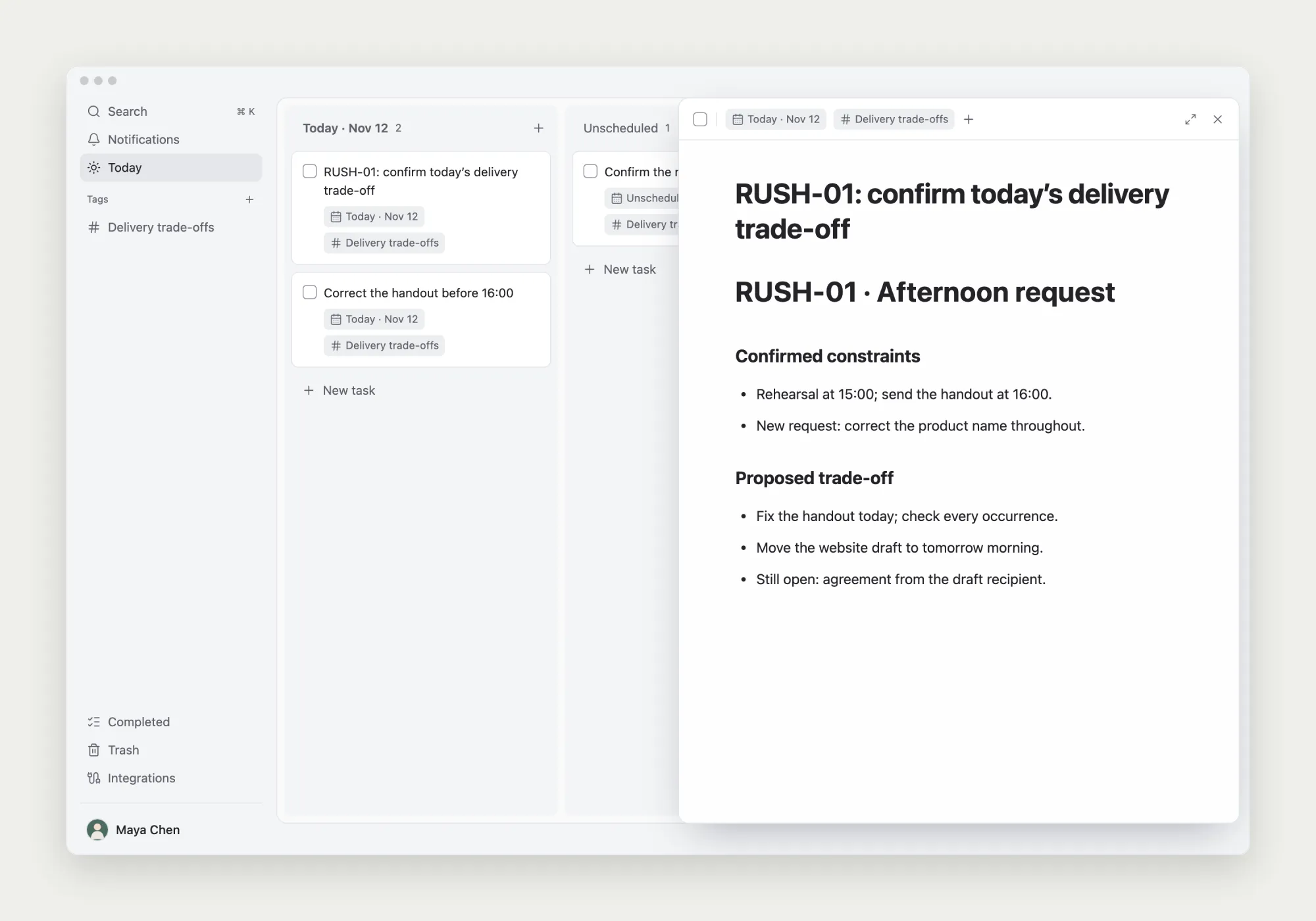
If the draft recipient cannot accept the delay, keep the conflict open while reducing scope or finding help. A suggested date should not appear as an accepted promise.
Return to the displaced commitment
After sending the handout, check that the old version will not be distributed. Then reopen the draft: when will work resume, who knows about the change, and what remains unconfirmed?
For repeated interruptions, review actual requests, use times and displaced deliveries. These records make capacity discussions more concrete than a general complaint about being interrupted.
Related practice: Too Many Tasks in Progress? Set Personal Kanban WIP Limits