After an interview, capture specific questions and the substance of your answers. Identify a missing fact, example, or structure, then schedule a focused improvement. Record what you learned about the role as well as how you performed.
“I answered badly” is too broad to act on. Missing personal contribution, missing evidence, misunderstanding a question, and lacking experience need different responses.
Reconstruct the important moments
Choose two or three significant questions rather than transcribing the whole interview. Retain follow-ups and feedback you actually received. When the wording is uncertain, keep its meaning without presenting it as an exact quotation.
Harvard Catalyst's post-interview guidance covers reflection on the role, organization, and your performance. Preserve both perspectives so the review helps you decide whether to continue as well as prepare better answers.
| Situation | Response | Record to keep |
|---|---|---|
| Contribution unclear | Keep question and original answer outline | Find evidence of your action |
| Outcome data missing | Name what was not recorded | Check available evidence |
| Role unclear | Separate known facts from questions | Prepare a follow-up question |
Find the gap in one answer
INTERVIEW-01 asks how you handled conflicting requirements. The answer described a team discussion without explaining your own action. The improvement is to retrieve the decision record and identify constraints, your contribution, and a verifiable outcome.
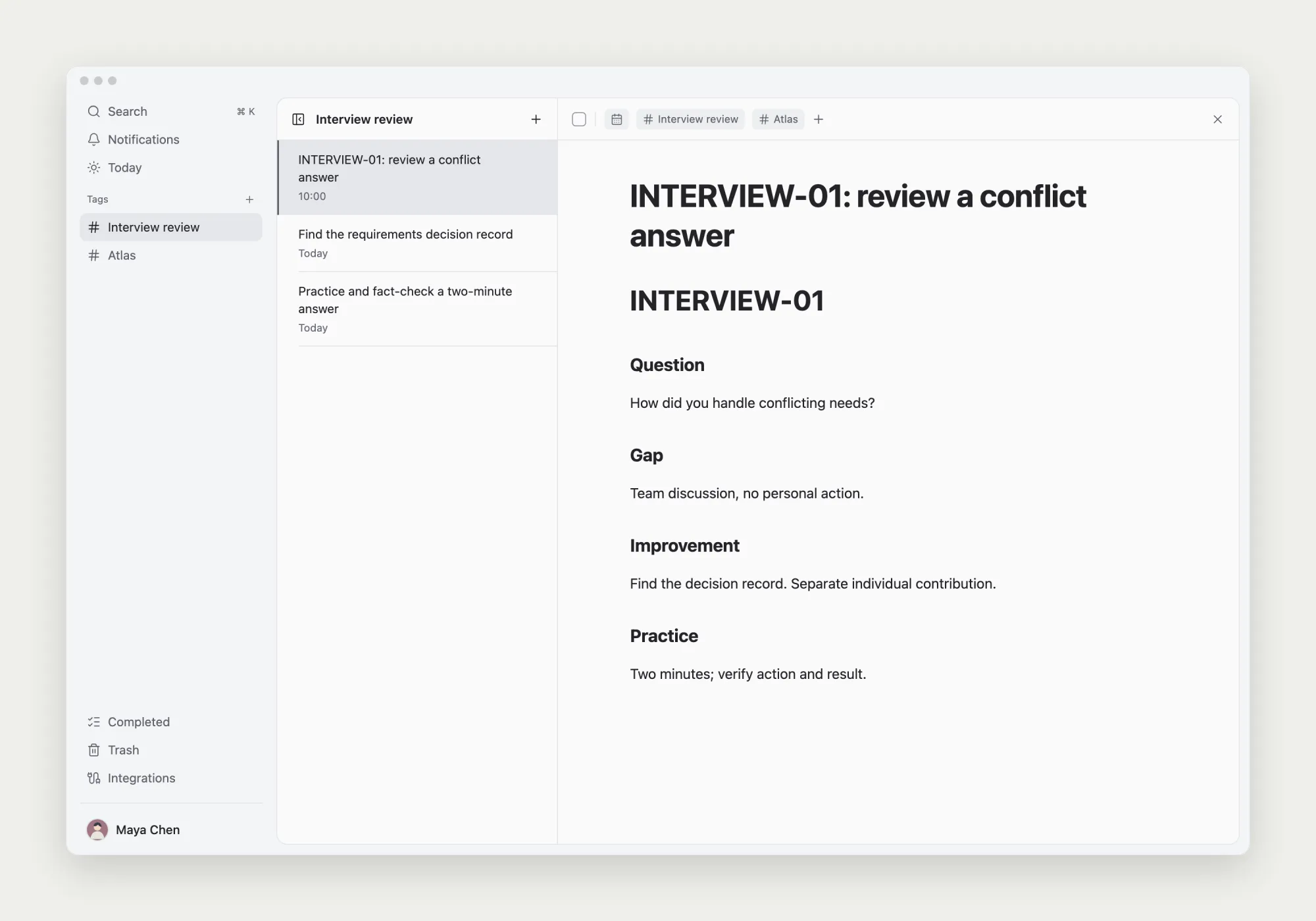
Do not improve the answer by inventing numbers or responsibilities. If outcome data was never recorded, explain the decision process, available evidence, and what cannot be attributed to your action.
Turn reflection into practice
Answer again in two minutes. Check whether you addressed the question, separated individual from team contribution, and explained the result and its limits. An outline or recording can help without becoming a script to memorize.
In TodoNote, keep each interview as a task with questions and feedback in its note. Arrange evidence gathering, practice, and role clarification separately. Tags by competency make similar questions easier to retrieve.
Separate observations from guesses
Silence can have many explanations. Keep “the interviewer asked about my contribution” separate from “they disliked my answer.” The observed follow-up gives you a concrete direction; the guessed reaction does not establish an outcome.
Retain questions about responsibilities, success criteria, and collaborators. Your next decision should use confirmed role information as well as lessons from the conversation.
A template to copy
Role, round, and date:
Key question:
Original answer outline:
Actual follow-up or feedback:

Missing facts or structure:
Verifiable evidence:
Improved answer outline:
Practice method and time:
New information about the role:
Questions still open:
Continue or stop, and why:Related workflow: How to track job applications, interview notes, and follow-ups
Sources and background: Harvard Catalyst